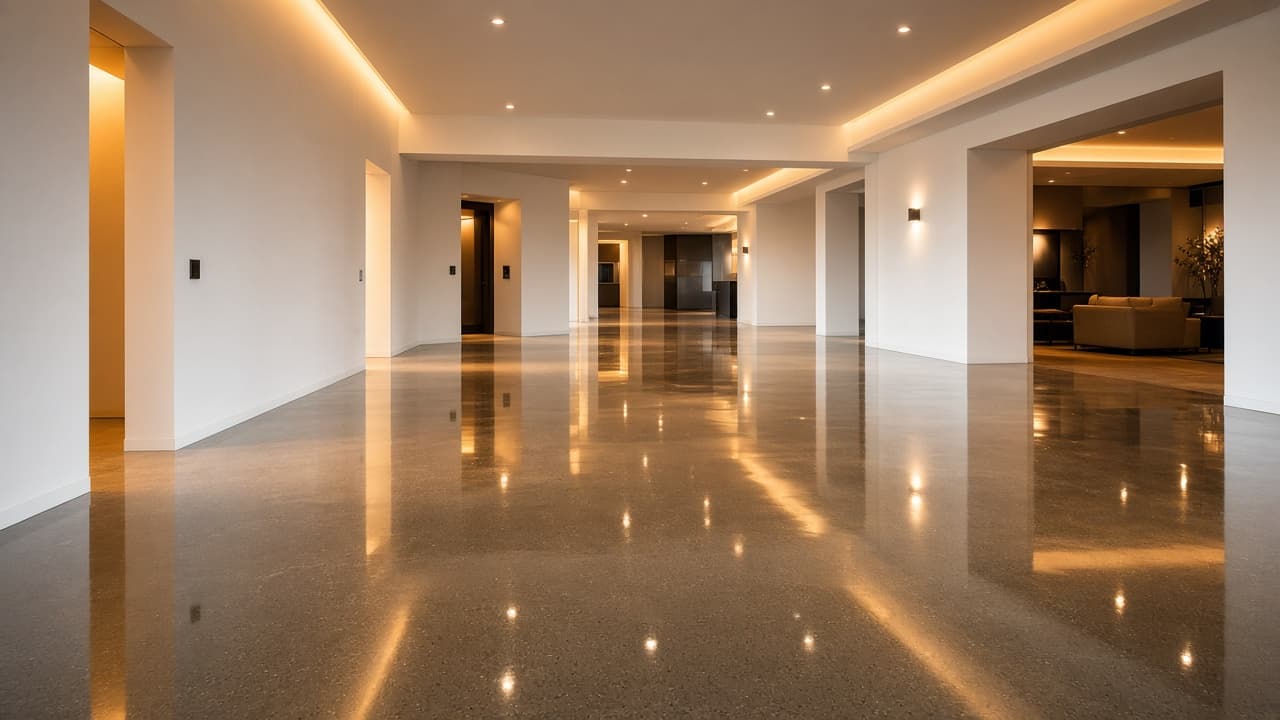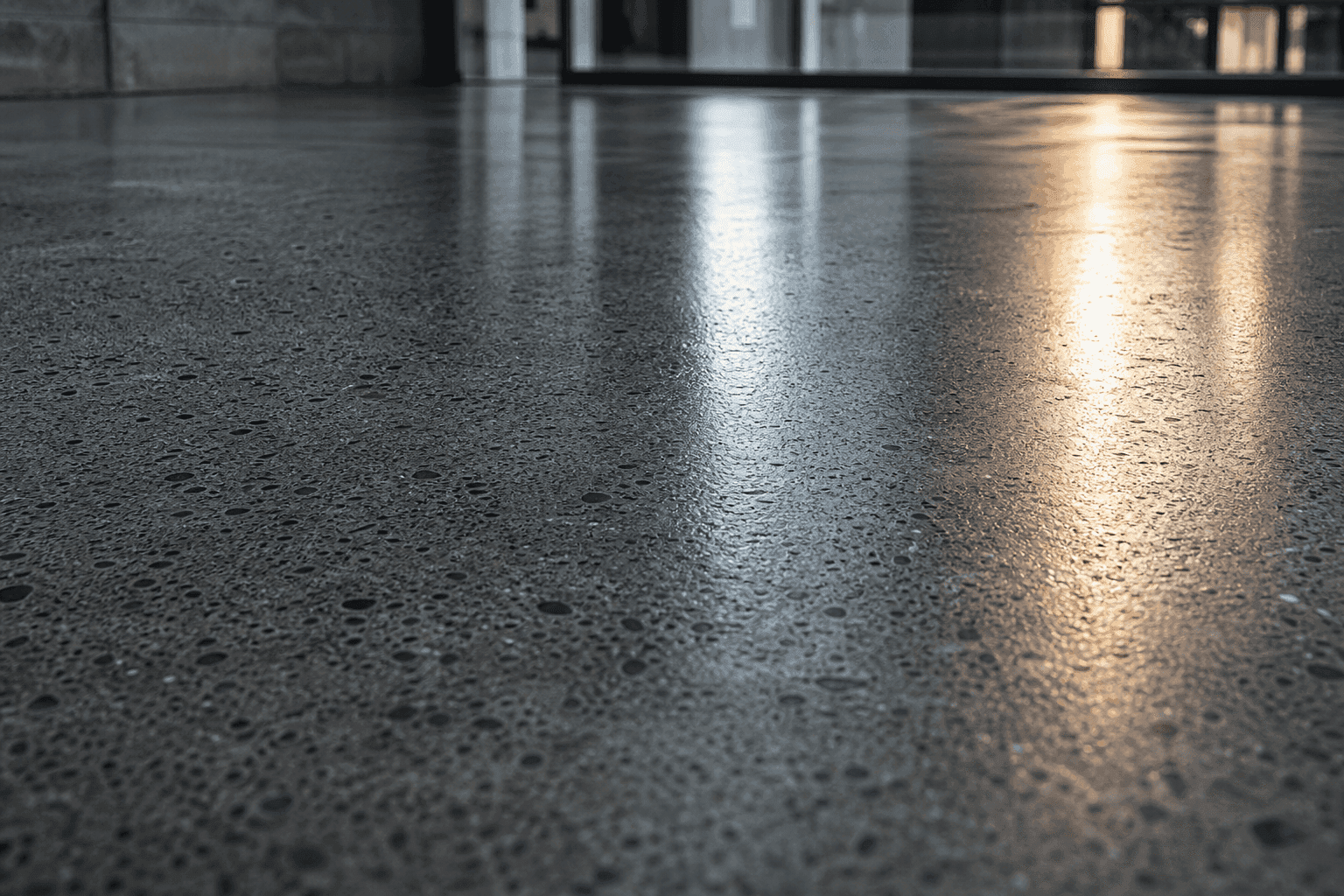
Your garage floor takes more punishment than any other surface in your home. Road salt and slush all winter, oil drips, hot tire marks in summer, tools dropped from workbenches, and a parade of boots caked in Thompson Valley mud. A bare concrete slab soaks all of it up. A coated floor sheds it. The question is which coating makes sense — and in Kamloops, where temperatures can swing 40 degrees between seasons, the answer isn't always the same as what works in Vancouver.
The three main types of garage floor coating
Standard epoxy
Epoxy is a two-part resin system that bonds to concrete and cures hard. It's been the standard garage floor coating for decades and for good reason: it's tough, resistant to oil and chemicals, and comes in a huge range of colours and flake systems. The main limitations in our climate are cure temperature and UV stability. Standard epoxy needs to be applied above roughly 10°C to cure properly, and it can yellow or chalk when exposed to UV over time. For an outdoor-facing garage with direct sun, that matters.
Polyaspartic
Polyaspartic is a newer aliphatic polyurea coating that addresses most of epoxy's climate limitations. It cures in a much wider temperature range, down to around -20°C for some formulations, which makes fall and early spring installs feasible in Kamloops. It's UV stable so it doesn't yellow, and it's typically harder and more abrasion-resistant than epoxy when fully cured. It also cures fast — many polyaspartic floors are walkable the same day. The trade-off is that it's less forgiving during application; the fast cure that's a benefit in the finished floor is a challenge if conditions aren't right.
Epoxy base with polyaspartic top coat
This is what we use on most of our Kamloops garage jobs: a thick epoxy base layer for build and chemical resistance, then a polyaspartic top coat for UV stability, abrasion resistance, and ease of cleaning. You get the best properties of both systems. The epoxy base gives you the colour and flake system you want; the polyaspartic top coat gives you the toughness and longevity on the surface that actually gets used.
What about DIY kits from the hardware store?
The kits at Home Depot and Rona are water-based epoxy paints, not the same product as a professional two-part system. They're significantly thinner, bond less aggressively, and almost always applied over an acid-etched surface rather than a mechanically ground one. Acid etching doesn't open the concrete profile as consistently as diamond grinding, so adhesion is weaker. The result is a floor that looks great for a year and starts peeling at the high-traffic spots by year two or three, especially with the freeze-thaw our garage floors see every spring. We're not saying this to sell jobs — we're saying it because we regularly get called to redo failed DIY epoxy floors.
Why prep is everything
The single most important factor in whether a coating lasts isn't the product — it's the prep. A premium polyaspartic coating over a poorly prepared slab will fail. A standard epoxy over a mechanically ground, clean, dry slab will last. Here's what proper prep looks like.
- 1Diamond grinding to open the surface profile (not acid etching). This creates the mechanical bond the coating needs.
- 2Crack and spall repair. Every crack, pit, and divot gets filled and allowed to cure before the coating goes down.
- 3Moisture testing. Coatings don't tolerate moisture migrating up through the slab. We test before we commit to any system.
- 4Edge work. The perimeter is handled by hand grinders and detail tools — it shows in the finished floor.
- 5Full removal of any existing paint, sealer, or coating. You can't coat over a coating that's already failing.
Flake, solid colour, or metallic: choosing a finish
The finish decision is aesthetic but it has some practical implications too.
- Full broadcast flake. The most popular choice for garages. The flake system fills the entire floor surface and is then encapsulated in a clear top coat. It hides imperfections and tire marks well, and the texture in the flake adds grip.
- Partial flake. A lighter scatter of flake over a solid colour base for a cleaner, more contemporary look. Popular in showrooms and workshop spaces.
- Solid colour. Clean and simple. Works well for workshops where you want marks to be clearly visible on the floor for safety. Solid colours show dirt and tire marks more than flake.
- Metallic and marbled. A single-layer metallic pigment system that creates a flowing, one-of-a-kind look. Dramatic and unique; every floor is different. Higher skill required — results vary by installer.
Non-slip texture: don't skip it
A smooth coated garage floor is slippery when wet, and in Kamloops that means snow melt in winter and morning dew in shoulder season. We build non-slip texture into every garage floor we do, either through the flake system or a fine broadcast aggregate in the clear coat. It's a small thing on the invoice but a meaningful safety difference when you're carrying groceries from the car in February.
How long does a garage floor coating last?
A properly prepared and applied polyaspartic system should last 10-20 years with normal use. The variables are how hard the floor gets used (daily vehicle traffic versus an occasional hobby space), how well it was prepped, and whether the right system was matched to the use. Signs that a coating is reaching end of life are dulling that doesn't buff out, delamination at the edges, or significant chipping at the threshold. At that point, the floor can usually be lightly abraded and recoated — you don't always have to start from scratch.
Scheduling around Kamloops weather
Late spring through early fall is ideal — warm temperatures, low chance of frost, and the garage has dried out from the winter salt cycle. That said, with polyaspartic systems and a heated garage, we can work through much of the year. If your garage doesn't have a heater, late October through February is trickier. The coating cures, but slowly, and below certain temperatures some systems won't reach full hardness. We'll give you an honest answer about timing when we quote the job.
Ready to stop babysitting a bare slab every winter? We do garage floor coatings across Kamloops and surrounding areas. Free quotes, no obligation. Give us a call.