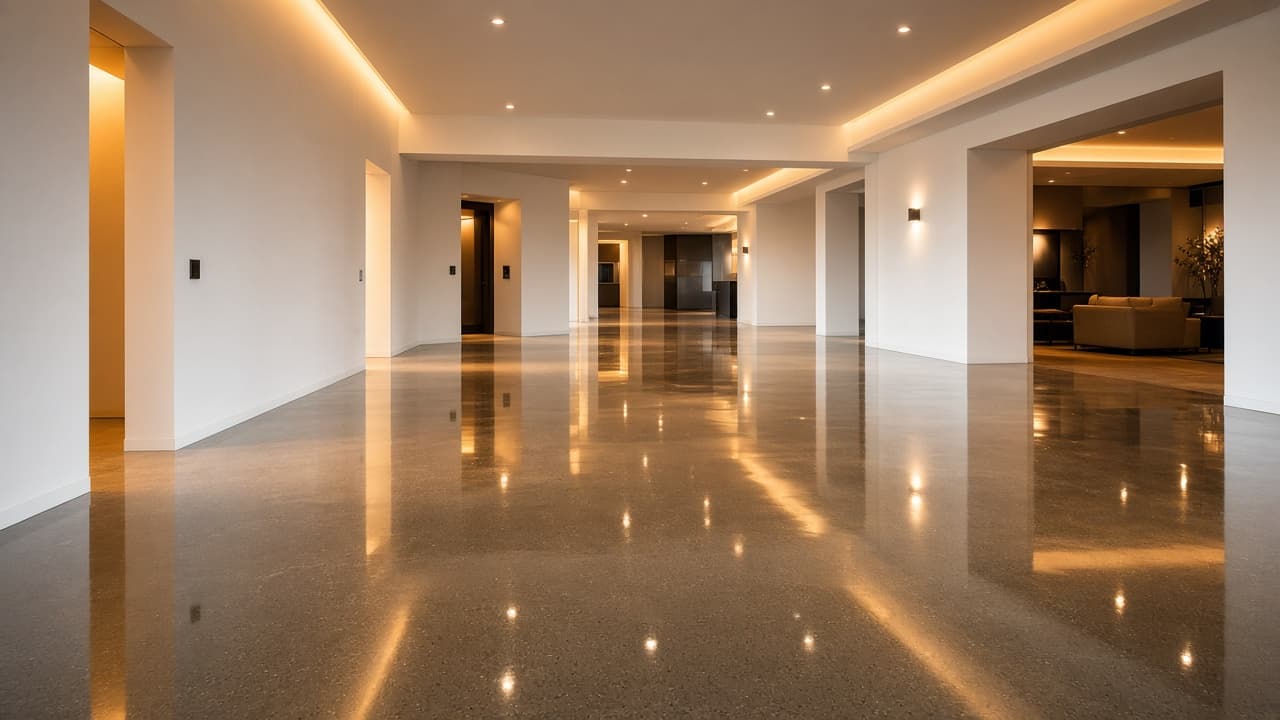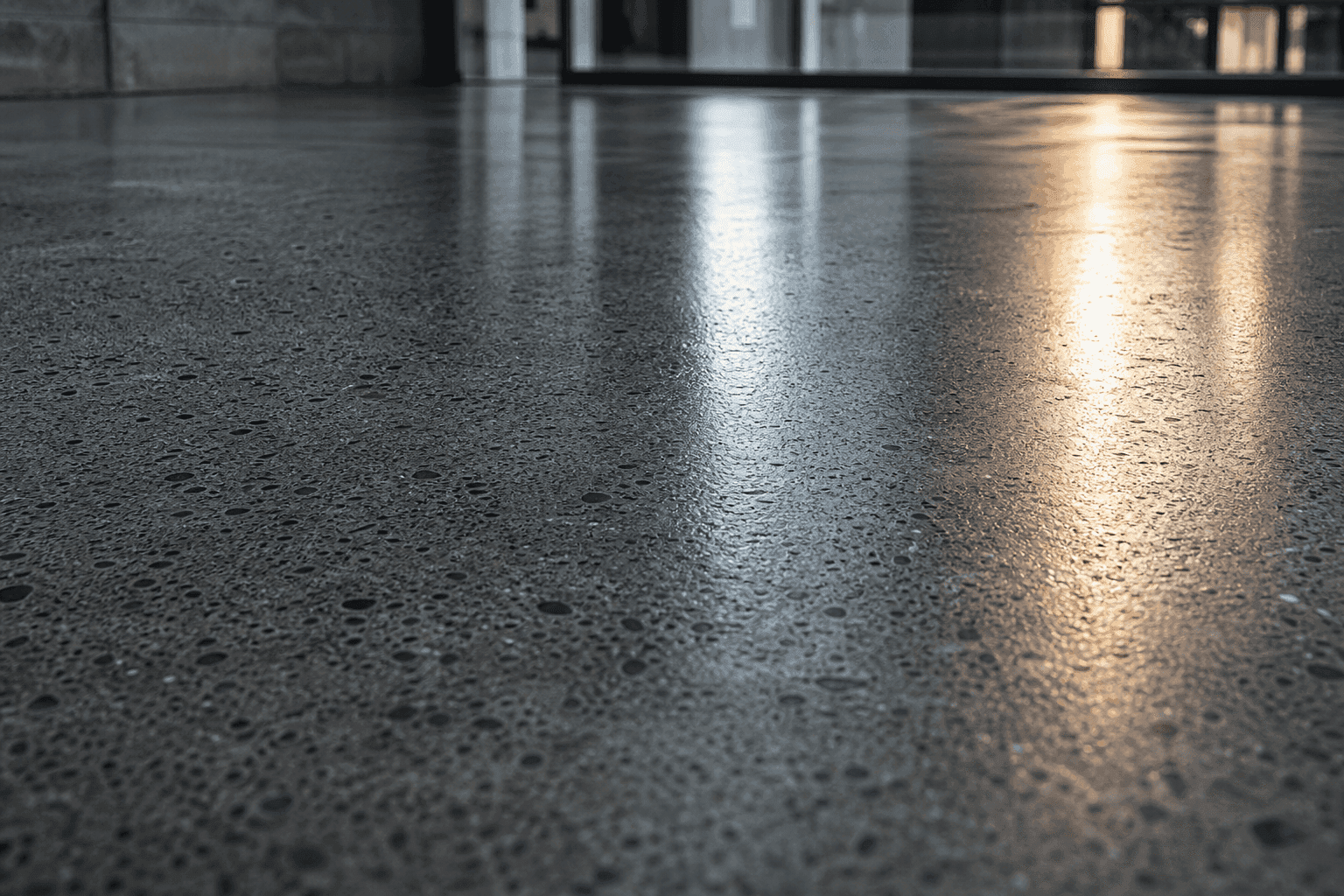
In-floor hydronic heating has been one of the most popular upgrades in new Kamloops construction for the past decade. Neighbourhoods like Juniper Ridge, Sun Rivers, and the newer builds in Batchelor Heights are full of homes with radiant heat built into the slab. The question homeowners in those places ask us most often is: what floor goes on top? And our answer, more often than not, is nothing — polish the slab itself. Here's why that combination works so well, and what you need to plan for.
How hydronic in-floor heating works
Hydronic radiant heat circulates warm water through a network of PEX tubing embedded in or below the concrete slab. The slab absorbs the heat and radiates it upward into the room. It's a fundamentally different way of heating compared to forced-air: instead of blowing hot air from a vent, the entire floor surface becomes a low-temperature radiator. The room warms from the ground up, which is how human bodies prefer to be heated.
Why concrete is the ideal material for radiant heat
Thermal mass is the key concept. Thermal mass is a material's ability to store heat and release it slowly. Concrete has excellent thermal mass — it takes a while to warm up, but once it's at temperature it holds that temperature steadily and gives it off evenly. Compare this to a hardwood or LVP floor over in-floor heat: both act as partial insulators, slowing the heat transfer and making the system work harder. Concrete is the heat distribution medium as well as the floor surface.
The practical result is a floor that feels warm underfoot throughout the slab, not just in a band over the tubing runs, and a system that cycles on and off less frequently. This is easier on the boiler and more comfortable to live in.
The planning conversation that needs to happen early
If you're building new or doing a major renovation, the conversation about floor finish needs to happen before the slab is poured — ideally before the tubing layout is designed. Here's why: the tubing layout, the slab thickness, the aggregate in the mix, and the finishing process all interact. If you know polished concrete is the final floor, the slab can be designed to maximise it.
- Slab design: a 4-inch slab over tubing is standard, but 5 inches gives more thermal mass and more material for grinding without risk of exposing the tubing. Worth discussing with your contractor.
- Mix design: the concrete mix affects how the floor polishes. A mix with good quality aggregate, well controlled water-cement ratio, and adequate air entrainment for freeze-thaw performs better. Ask your concrete contractor to use a mix specified for polished concrete.
- Control joint placement: work with both the radiant heating contractor and the concrete finisher to place control joints where they can be effectively managed in the polished floor.
- Curing: the slab needs to fully cure (typically 28 days minimum) and the radiant system needs to be commissioned slowly before polishing begins. Running the heat at full temperature in a new slab can cause rapid drying and cracking.
Commissioning the heat system before polishing
This step is skipped more often than it should be. Before we grind and polish, the radiant system should be fully commissioned and run through at least one heating and cooling cycle. This lets the slab move, crack where it's going to crack, and dry out to its equilibrium moisture content. Polishing a slab that hasn't been through this process risks cracking after the polish is done, as the slab adjusts to temperature.
The polishing process over a heated slab
We turn the heat off or to a low setting before polishing. The grinding process generates some heat from friction, and a warm slab combined with process heat can cure the densifier too quickly, reducing penetration. We also take extra care with crack routing and filling around control joints, as heated slabs sometimes show more movement at joints than unheated ones.
Everything else in the polishing process is standard: grind, hone, densify, finish polish, seal. The finished floor looks the same as a polished concrete floor over any other slab, with the benefit of a warm surface underfoot from October through April.
Retrofitting over an existing heated slab
Many of the calls we get about polished concrete over radiant heat are from homeowners who have an existing heated slab and want to change the floor. The old floor covering comes off — carpet, tile, hardwood — and there's a perfectly good concrete slab underneath. We assess the condition of that slab, deal with any adhesive residue or damage, and polish it the same way we would any other floor. The only extra precaution is checking where the tubing runs before we grind too aggressively in any one area.
Maintenance and living with a polished radiant floor
Daily life on a polished concrete floor over in-floor heat is genuinely comfortable. The floor feels warm from the moment you step out of bed from October through spring. Dry dust mopping is the main routine — the same floor care you'd do with any smooth floor. The sealer we use is compatible with the temperature range of residential radiant heat (typically 18-24°C surface temperature), so there's no special product needed.
One practical note: area rugs are fine on a polished concrete floor over radiant heat, but R-value insulating rugs or thick underlay will reduce the heat output in that area. Low-pile rugs with minimal underlay let the heat through while softening acoustic and cushioning.
If you're in a Kamloops home with in-floor heat and wondering about the floor options, we'd love to talk it through. We serve newer developments across Juniper Ridge, Sun Rivers, and Aberdeen. A free on-site quote includes an honest conversation about what your slab can do.